
The Science of Washington's Coastal Canopies
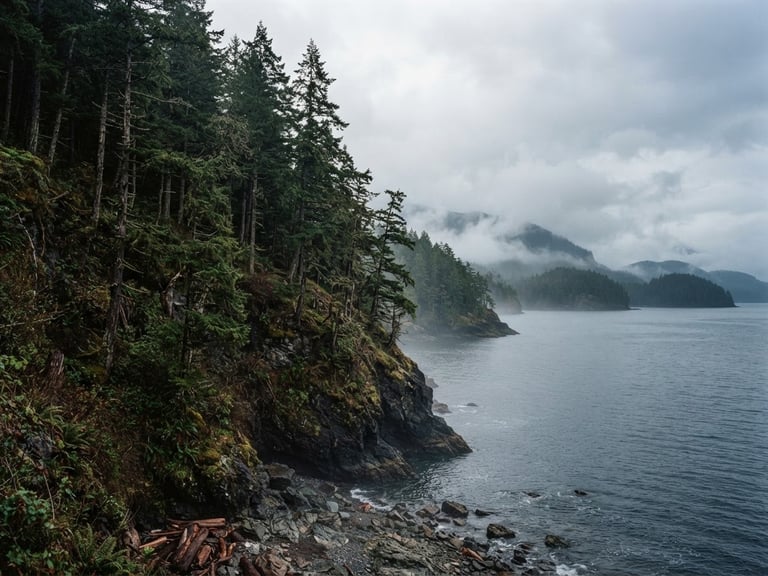
Mature Douglas firs and cedars do more than shade our streets. Their massive root networks anchor fragile shorelines, while their dense canopies filter rain before it reaches the Sound.
Three Pillars of Shoreline Health
Every mature tree stands as a living shield against erosion, runoff, and habitat loss.
Rainwater Interception
Soil Stabilization
Critical Habitat
A single mature canopy intercepts thousands of gallons of rainwater annually, slowing the deluge and reducing toxic stormwater runoff entering coastal watersheds.
Deep, interlocking root systems bind shoreline soil together, actively preventing devastating hillside erosion and coastal landslides during winter storms.
Urban forest canopies provide irreplaceable nesting sites and migratory corridors for native Pacific Northwest wildlife, from bald eagles to local pollinators.
The Value of Mature Stands
35%
minimum canopy required for watershed stability
10k Gal
rain intercepted per mature tree each year
85%
reduction in topsoil erosion on forested slopes
Canopy Science FAQ
Understanding the mechanics of urban forestry and shoreline protection.
Have questions about a specific tree on your property or local shoreline ordinances? Our team of urban foresters is here to help.
Why are mature trees more valuable than new saplings?
How do tree roots prevent coastal landslides?
What is the critical canopy threshold for Puget Sound?
While saplings are vital for the future, they lack the canopy volume and deep root architecture of mature trees. A 100-year-old Douglas fir intercepts 70 times more rainfall than a newly planted tree.
Roots act as biotechnical ground anchors. They penetrate multiple soil layers, binding the earth together and absorbing excess groundwater that would otherwise liquefy and trigger slope failure.
Hydrologists recommend maintaining at least 35% to 40% canopy cover in urban areas to protect local streams and marine life from severe stormwater runoff and temperature spikes.
Save Shoreline Trees
Defending Washington's mature coastal canopies and shoreline stability.
Home-Our Canopy-Campaigns-Get Involved
Get in touch
brown@saveshorelinetrees.cloud
Seattle, Washington
Active across Puget Sound
© 2026 Save Shoreline Trees-Advocating for Washington's urban forest ordinances.
ROOT SYSTEMS & SHORELINE STABILITY